
VPN vs Firewall: What Actually Protects You Online in 2026
The year is 2026 and the internet feels faster, sharper, and far more observant. Your data moves constantly through apps, websites, smart devices, and AI tools that quietly track what you click, watch, and type.
A 2025 review reported that 86 percent of U.S. adults consider data privacy a growing concern. Most people sense the shift. Add unsecured WiFi networks, outdated software, and overly intrusive apps to the mix, and the exposure becomes harder to ignore.
That tension fuels the VPN versus firewall conversation. Both tools strengthen your online safety, yet they serve different functions. One protects your identity and browsing activity. The other protects your devices and network connections. Knowing how each works, and when to use them together, plays a key role in staying secure in 2026.
VPN: Your Privacy Shield
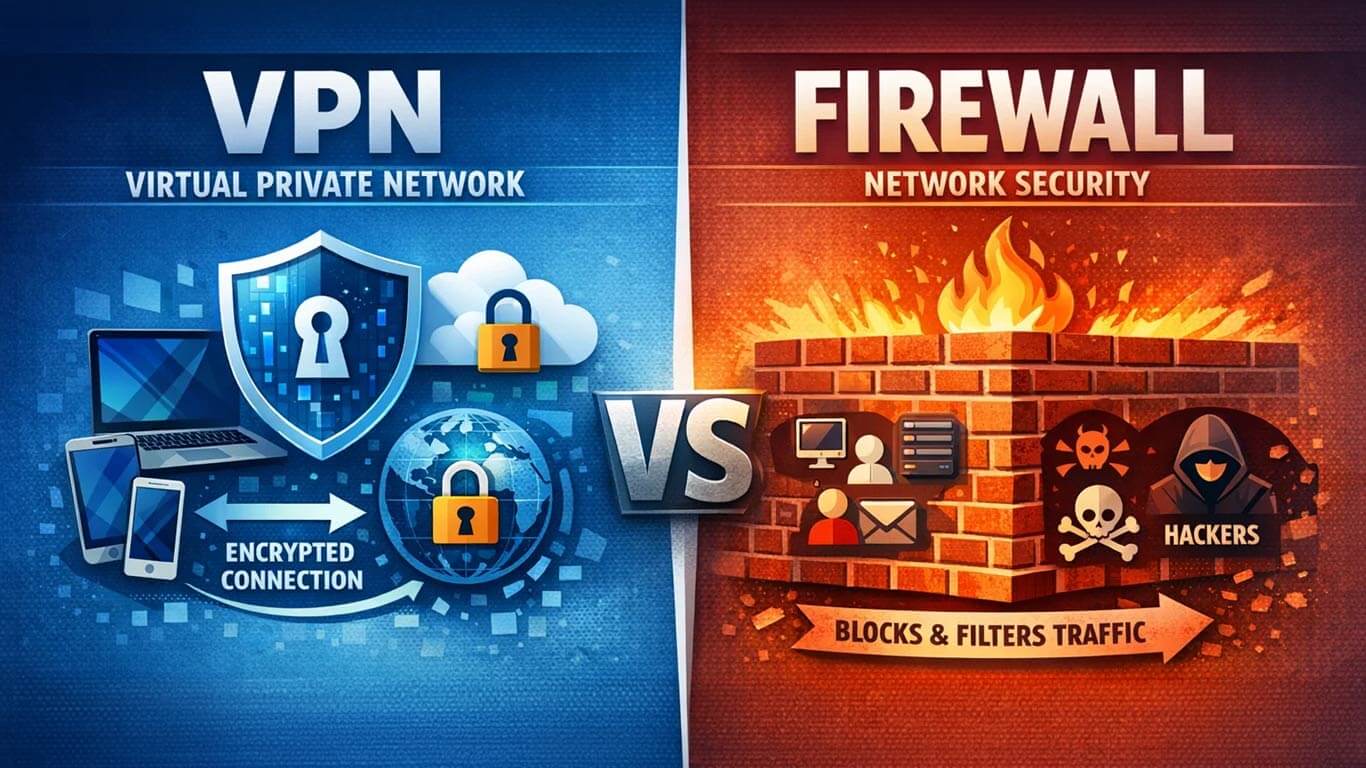
In the classic VPN vs firewall debate, the VPN’s main claim to fame is privacy. A VPN (Virtual Private Network) basically makes your internet activity unreadable to anyone else and hides your real IP address. This means everything you do online is hidden and your actual location is masked.
This matters more than ever because AI trackers, social media, smart home gadgets, streaming platforms and even your regular browser collect personal data they can use for advertising and marketing. The VPN is your first defense against all the new ways your information can get scooped up.
Pro tip:Free or low-quality options can slow you down or even collect your data. Stick to reputable VPNs with strong encryption and a strict no-logs policy.
Firewall: Stopping Intruders
Here’s the other side of the VPN versus firewall conversation. A VPN and a firewall serve different purposes. A firewall, much like the literal firewall that protects property from spreading flames, stands between your network and potential intruders. It monitors incoming and outgoing traffic and blocks connections that trigger security concerns before they can cause damage.
There are two main types of firewalls.
Software firewalls run on your phone, tablet, or computer. They monitor activity on that specific device and stop suspicious connections.
Hardware firewalls protect an entire network through a dedicated physical device. They work well in homes with multiple users, smart appliances, cameras, and connected systems.
Why does this matter? Every connected gadget adds another entry point. Smart TVs, security cameras, refrigerators, and thermostats all communicate online. A firewall controls who gets access and keeps unauthorized traffic out.
Quick tip: Most devices already include a built-in firewall. Open your settings, confirm it is activated, and keep it updated.
VPN vs Firewall: Key Differences
So, what is the real difference between VPN and firewall? Here’s a simple take: a VPN hides what you do online, while a firewall keeps out unwanted guests.
Let’s break it down even easier:l0
| Feature | VPN | Firewall |
| Main Goal | Hide your online activity and identity. | Block malicious threats and unauthorized access. |
| Works On | Your internet traffic. | Your devices and network connections. |
| Protects Against | Trackers, ISPs, government surveillance, and snoopers on public Wi-Fi. | Malware, viruses, hacking attempts, and unauthorized remote access. |
| 2026 Focus | Defeating AI-powered tracking and bypassing streaming geo-restrictions. | Securing smart homes, IoT devices, and preventing complex malware attacks. |
There isn’t actually a winner, they’re doing different things. The VPN keeps your online life private, while the firewall blocks the bad guys from even knocking on your door.
When You Should Use a VPN
Not sure when the “Firewall VPN” combo isn’t enough and you actually need separate protection? Here are some no-brainer moments to turn on a VPN:
- Public Wi-Fi at coffee shops, airports, and hotels stays secure through encrypted connections.
- Region-locked content for streaming or gaming abroad is accessible safely via VPN servers in other countries.
- Using new AI tools and apps keeps your personal data private.
- Sensitive information, including emails, client files, and personal data, is protected from interception.
- Frequent travelers maintain security across multiple networks without exposure risks.
When a Firewall is Non-Negotiable
- Working or studying from home stays secure as firewalls block suspicious remote connections and protect shared files.
- Smart home devices, including cameras, fridges, and smart speakers, remain safe from intruders.
- Malicious software is detected and blocked before it can cause damage.
- Public or shared Wi-Fi gets an extra layer of protection, even alongside a VPN.
- Shared networks prevent malware from spreading across devices in your home or office.
Firewalls quietly do the hard work in the background, keeping threats out so you don’t have to stress.
Do You Need Both?
Here’s where everything clicks. Strong protection does not come from choosing between a firewall or a VPN. It comes from using both.
Each tool handles a different part of your security. A VPN shields your online activity from prying eyes, especially on public or unsecured networks. A firewall protects your device by controlling which connections are allowed in and out.
Assess your purpose. One protects your privacy while browsing. The other protects your system from unwanted access.
Put them together and you build a layered defense that covers both visibility and access. In today’s internet environment, that combination prepares you for most of the threats moving around online.
Build Your Two Layer Defense Strategy
Privacy and protection move together. Using both adds depth to your security. Whether you work remotely, run a smart home, or simply scroll and shop, that combination delivers practical protection and genuine peace of mind.
Take a moment to review your devices. Update your software. Turn on both layers.
Staying secure online comes down to preparation and control. The digital world moves fast. Your defenses should keep pace.
Credit monitoring gets dismissed as a dull service that barely moves the needle, which is why most people refuse to spend a …

Cybercriminals have a new routine that looks perfectly ordinary: fake CAPTCHA pages. Once a simple test to separate humans from bots, CAPTCHA has quietly turned into a tool for deception.